Guided routes

Walks through the White City

Four thoughtfully paced routes. Meet near Dizengoff, walk at conversational speed, and leave with a clearer map of Tel Aviv’s modernist DNA.

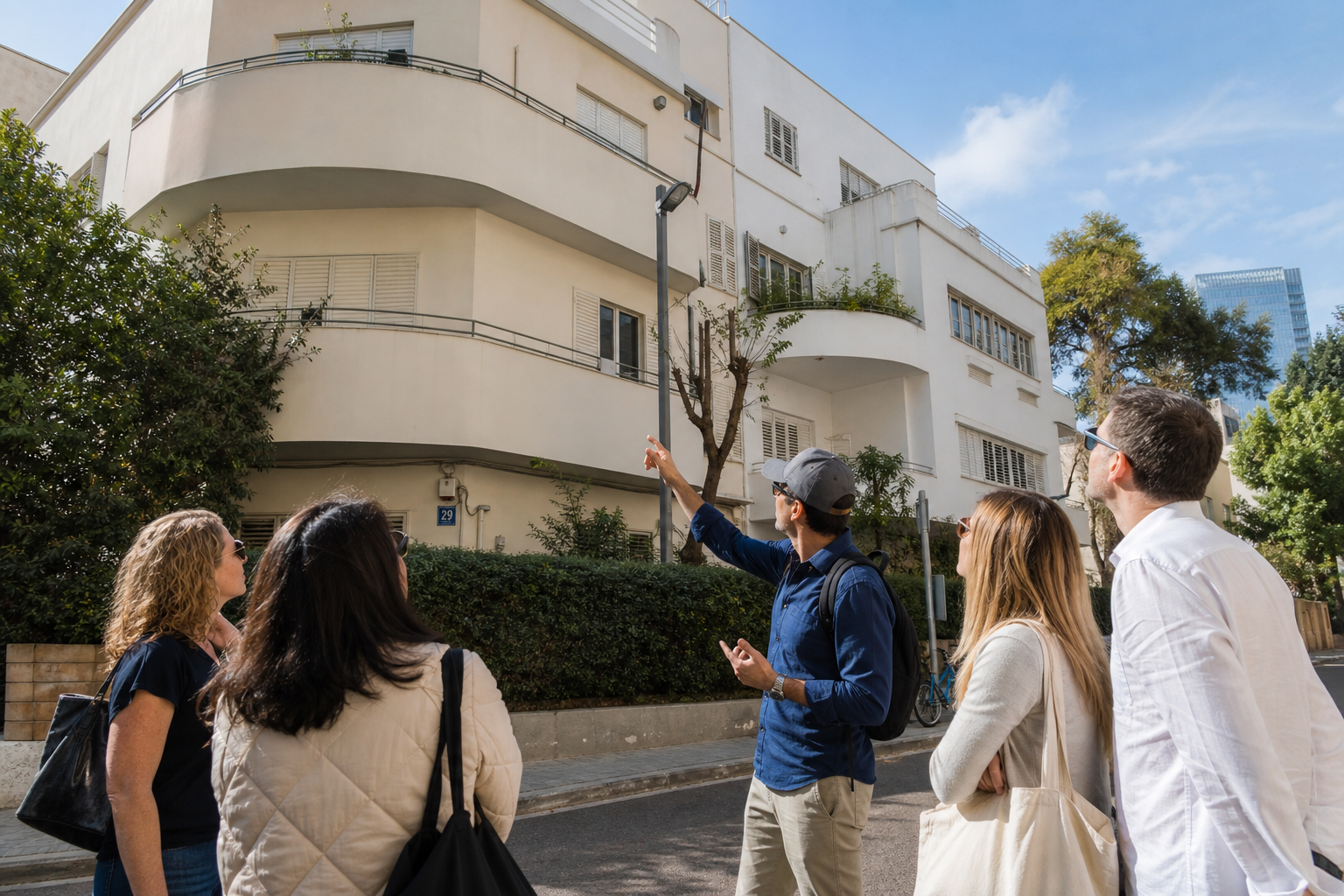
Small tour group looking at a White City Bauhaus building

Groups stay small so everyone can hear façade notes and ask questions.

Street school, not a lecture hall

We stop at corners where proportion, climate, and planning decisions are visible. Expect stairs, shade, and a few quiet courtyards when access allows.

Public walks run most weeks; private walks can be scheduled for families, design studios, and corporate groups.

Signature walks

01

Dizengoff Geometry

Start with the language of the White City: rounded corners, flat roofs, pilotis, and the social sidewalk. Ideal first walk — clear, visual, and rich in everyday modernism around Dizengoff and adjacent streets.

Duration 2 hours Distance ~2 km Meet Dizengoff area
02

Rothschild Boulevard

Follow the boulevard’s civic spine: apartment blocks, cultural landmarks, and the story of how International Style became Tel Aviv’s public face. Shade trees, long vistas, and classic White City silhouettes.

Duration 2.5 hours Distance ~2.5 km Meet Rothschild / Allenby edge
03

White City Details

A slower, more photographic route focused on balconies, railings, stair cores, window bands, and material weathering. Perfect if you already know the big names and want to see craft.

Duration 2 hours Distance ~1.5 km Meet Lev Ha’ir
04

Private & Custom

Design your own path: photography-focused, Hebrew/English bilingual, student workshops, or neighborhood deep-dives beyond the usual postcard streets. Minimum booking applies.

Duration 2–4 hours Group Up to 20 Meet By arrangement

White City eras we reference

A sticky guide to the decades that shaped the streets under your feet — used as context on every walk, not as a legal checklist.

1909 – 1920s

From dunes to garden city

Tel Aviv grows from Ahuzat Bayit into a planned urban experiment. Eclectic façades dominate early decades; the groundwork for a modern street grid is laid around what will become the White City core.

1930s

International Style arrives

Architects trained in Europe bring Bauhaus and modernist principles — flat roofs, horizontal windows, pilotis — adapted for Mediterranean light and climate. Neighborhoods around Dizengoff, Rothschild, and Lev Ha’ir take their white, geometric character.

1940s – 1960s

War years and densification

Building continues under pressure; later additions and renovations layer onto original modernist stock. The city’s white plaster weathers, is painted, and is lived in — modernism as everyday housing, not pure theory.

2003 – present

White City as living heritage

Tel Aviv’s White City is recognized on the UNESCO World Heritage List for its outstanding ensemble of modernist architecture. Conservation, adaptive reuse, and careful walking tours help share that story while residents still inhabit these streets.

Ready to walk?

Tell us which route interests you, preferred dates, and group size. We’ll confirm meeting point details near Dizengoff.

Contact TLV Bauhaus